Where should a porta potty go? The short checklist
A porta potty should sit on firm, level ground within about 15 feet of where a truck can park. The porta potty also needs a clear path at least 48 inches wide, a door that faces away from the crowd, and some distance from windows, patios and food.
Run through this list before you call. Each item saves the driver a phone call and you a moved unit.
- Ground: firm and level. A mild slope is fine. A steep one is not.
- Truck access: within about 15 feet of where a truck can park, or along a path the crew can roll a dolly.
- Path width: 48 inches clear for a standard unit, about 66 inches for a wheelchair-accessible unit.
- Overhead: no low wires or branches over the drop spot.
- Distance: away from bedroom windows, patios, food tables and your neighbor's sitting area.
- Wind: downwind of where people gather, if you can tell which way the wind usually blows.
- Light and shade: near a light for evening use, and in afternoon shade in July and August.
- Rules: on private property, inside your HOA's rules. Streets, sidewalks and tree lawns usually need a city permit.
How wide does a gate need to be for a porta potty?
A standard porta potty is 43.5 inches wide, so the gate or path needs at least 48 inches clear. A wheelchair-accessible porta potty is 62 inches wide and needs about 66 inches. A restroom trailer needs driveway or road access and a level spot about 20 by 8 feet.
Measure the narrowest point between the truck and the spot. Gate posts, a parked car or an AC unit often set the real width.
| Unit | Size (manufacturer) | Clear path needed | Good to know |
|---|---|---|---|
| Standard porta potty (PolyJohn PJN3) | 43.5 in wide, 47 in deep, 91 in tall | 48 in | Fits most single backyard gates |
| Deluxe flushing unit (PolyJohn Fleet) | 47 in wide, 47 in long, 91 in tall | Wider than 48 in; tell dispatch your gate width | A 48-inch gate is too tight |
| Wheelchair-accessible unit (PolyJohn Comfort XL) | 62 in wide, 62 in deep, 91 in tall | About 66 in | Usually needs a double gate or open side yard |
| Hand wash station (PolyJohn Bravo) | 26.5 in wide, 21.5 in deep, 62 in tall | About 30 in | Goes through almost any gate |
| Restroom trailer | Needs a level spot about 20 ft x 8 ft | Driveway or road access for a pickup-towed trailer | Also needs a 120V 20-amp outlet within 100 ft |
Ready to book or price it out?
A local dispatcher answers Mon–Sat, 7 a.m.–7 p.m.. Have your ZIP, dates and headcount ready, and you get an itemized price on the call.
Also check height. All three toilet units stand 91 inches tall, so a low carport, deck or tree limb can block the path.
Can a porta potty go on a slope or a soft lawn?
A porta potty can sit on a mild slope, but a steep slope makes the porta potty rock and the tank lean. Soft, wet lawns are the bigger problem: a loaded truck or dolly can leave ruts. A driveway, gravel pad or dry, flat patch of grass is the safest spot.
Stand where the unit will go. If you would not set a picnic table there, pick another spot. A level unit stays steady and the door closes properly.
After a week of rain, grass between the street and the backyard can turn soft. Tell dispatch when you book so the crew can plan the route. Pavers, edging and sprinkler heads are easy to crush, so mark them.
- Avoid low spots where water pools after a storm.
- Keep the unit off septic lids, drain fields and well caps.
- Leave a clear patch in front of the door for stepping out.
Where should a porta potty go at a house?
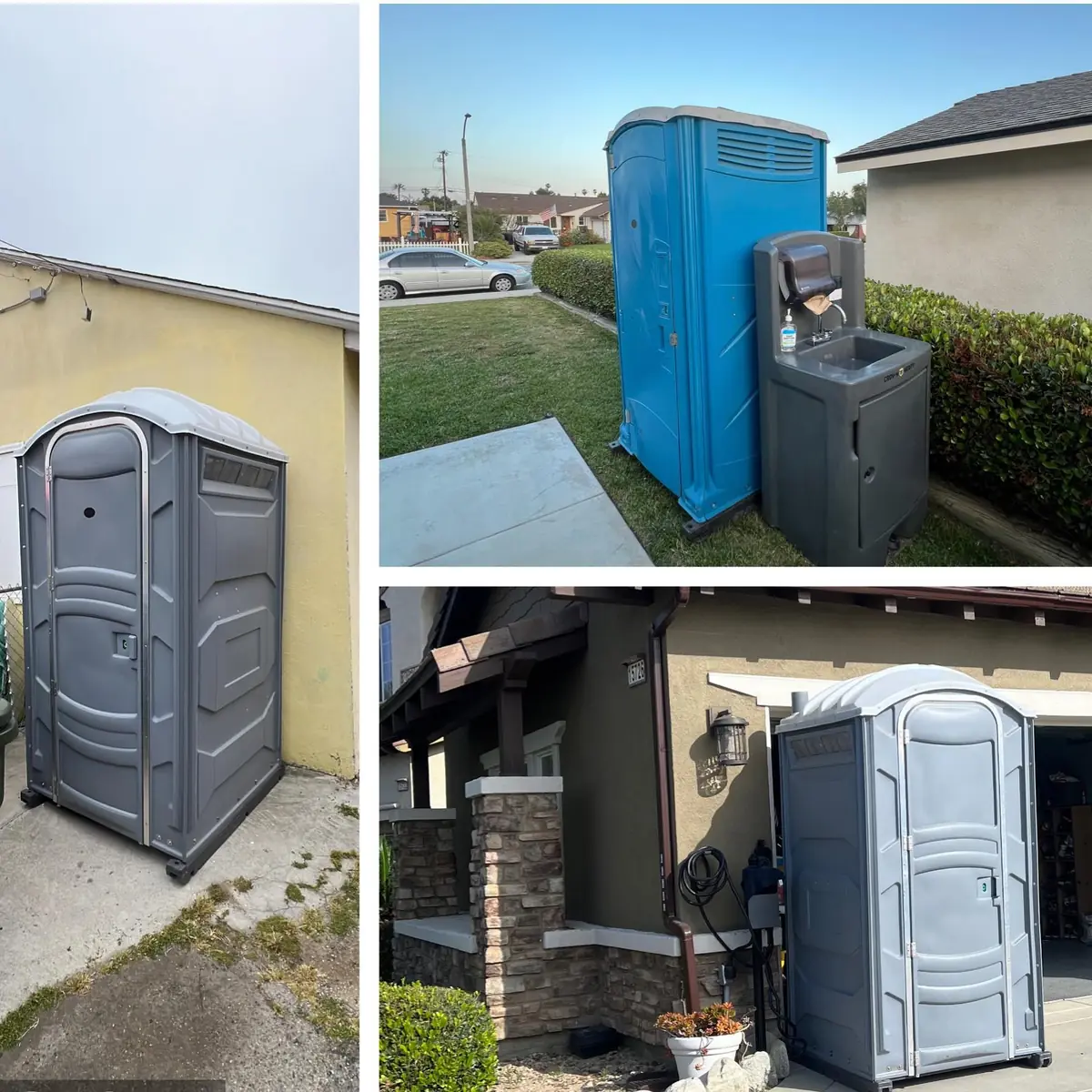
At a house, a porta potty usually goes on the driveway beside the garage or in a side yard. Those spots are level, reachable from the street and easy to service. Keep the porta potty away from your patio and your neighbor's windows, and face the door toward your house.
For a remodel or a septic repair, the driveway is often best. Workers reach the unit without walking through the house. The service truck can reach the unit every week without crossing your lawn. See our porta potty rental for home projects for rental lengths.
For a backyard party, the side yard near the gate works well. Guests find the unit without walking through the house, and the unit stays out of party photos.
Keep the unit on your own property. The tree lawn, sidewalk and street are public right-of-way in most cities, and placing a unit there usually needs a permit. Our porta potty permit guide for Dayton covers who to call. HOAs may also limit where or how long a unit can sit, so check first.
Where should a porta potty go on a job site?
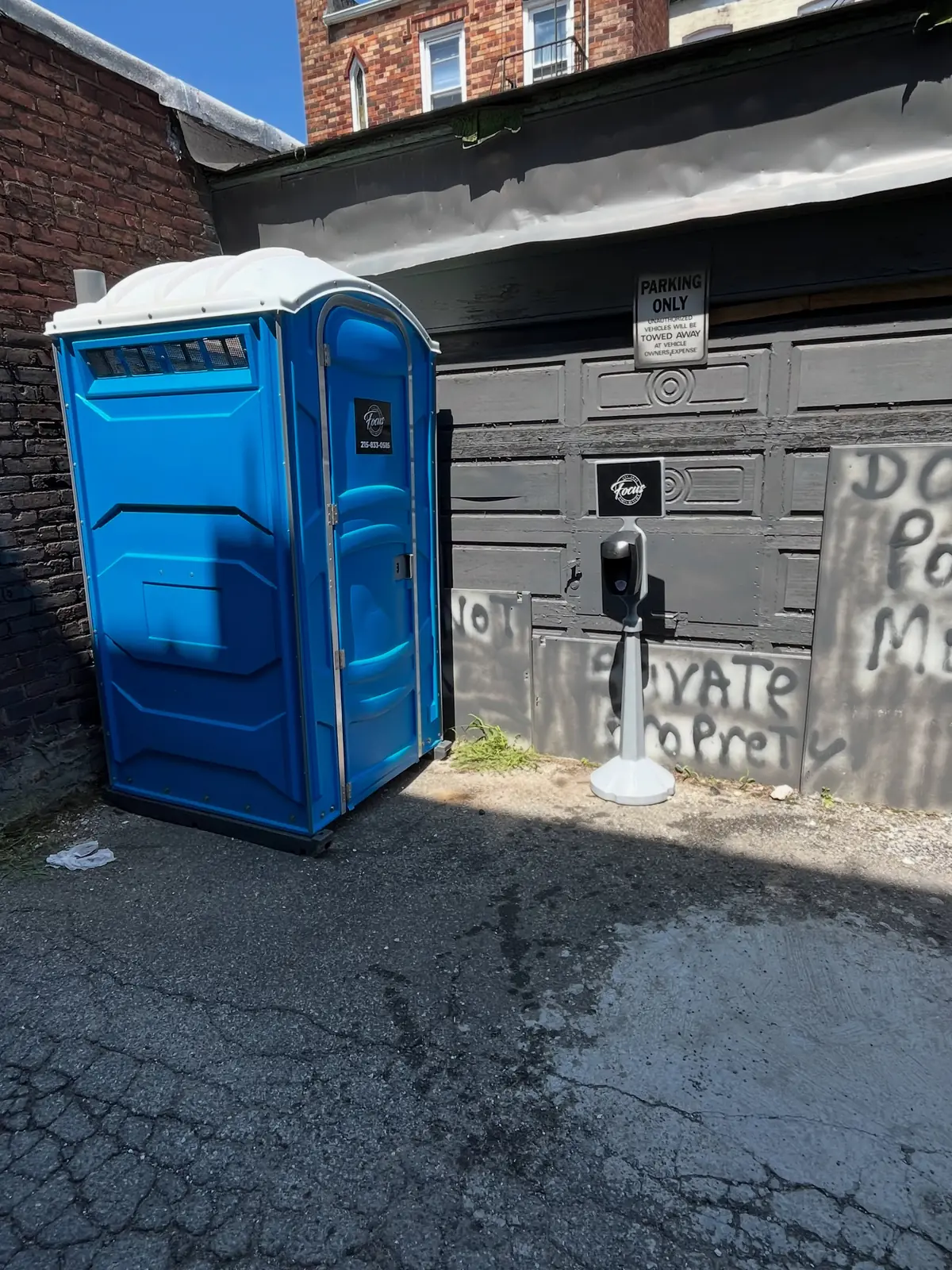
On a job site, a porta potty should sit close to the work but outside the path of equipment, deliveries and dumpsters. The service truck needs to reach the porta potty every week, so keep a clear lane about 15 feet from a drivable surface. Toilets that take too long to reach slow the crew.
Pick a corner that will not change as the job grows. Concrete trucks, lifts and material drops move every week, and a toilet in their path gets moved or damaged.
OSHA expects workers to have prompt access to toilets. Our guide to OSHA porta potty requirements explains the counts and the mobile-crew exemption.
- Ask for a free padlock hasp if the site is open to the public after hours.
- Put a hand wash station right beside the toilet so workers use both.
- Text dispatch the gate code so service day is not missed.
More on crew sizes and weekly service is on our construction porta potty rental page.
Where should porta potties go at an outdoor event?
At an event, porta potties work best in one cluster at the edge of the crowd, downwind of food and seating. The cluster should have a hand wash station, a light for evening use and a firm, level route for the wheelchair-accessible unit. Guests find one cluster faster than scattered units.
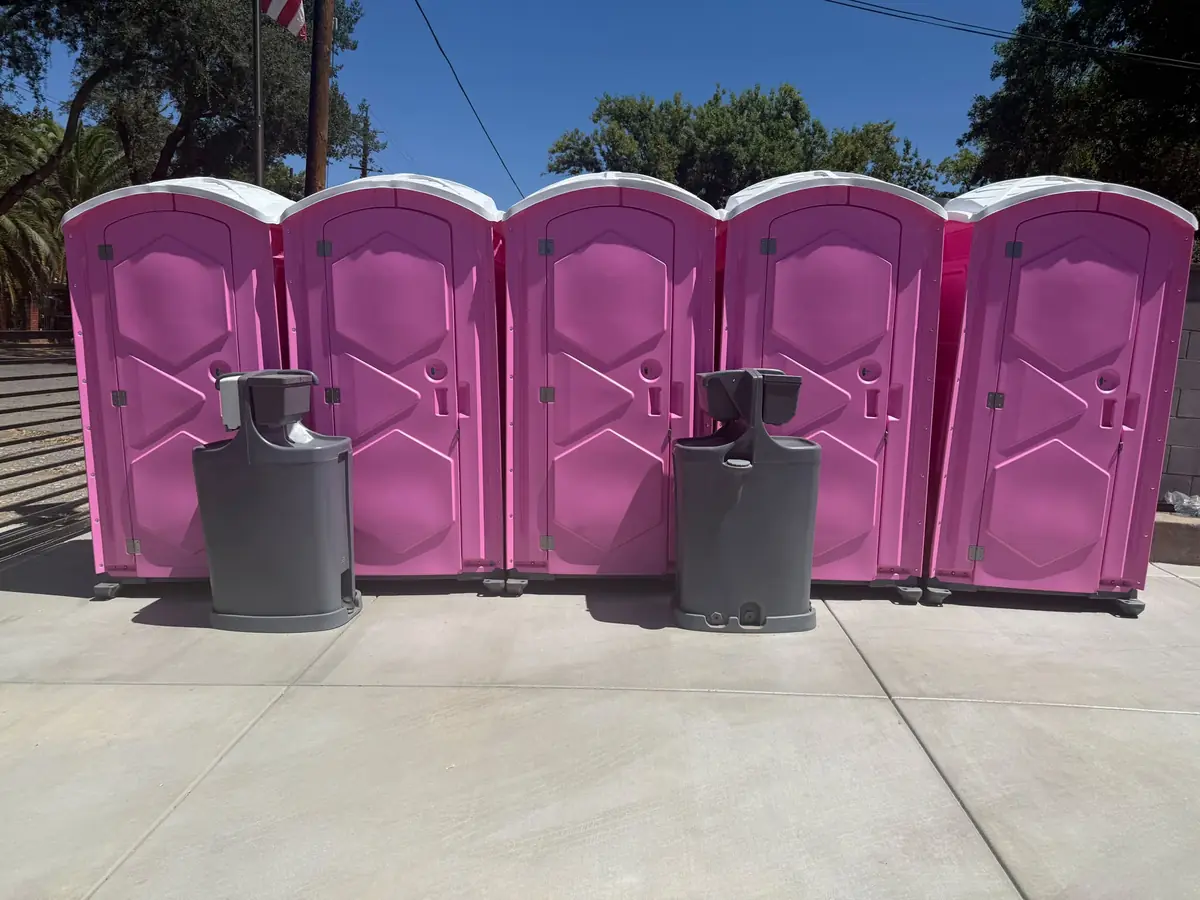
- Distance from food: our rule of thumb is a short walk away and out of sight lines from the buffet. Close enough that guests do not wander off looking.
- Wind: on most days the wind carries odor, so put units on the side the wind blows toward.
- Shade: Dayton summer highs reach the mid-80s with humidity. Afternoon shade keeps the inside cooler and cuts odor.
- Light: place units near a pole light or plan a string of lights for events past sunset.
- Access: keep the back of the cluster open to a drive lane if you booked a mid-event service.
- Accessibility: place the wheelchair-accessible unit on a hard, level path with a 60-inch turning space in front of the door.
To work out how many units you need, use the porta potty sizing calculator. Planning tips for parties and festivals are on the event porta potty rental page.
How do I show the driver where to put the porta potty?
Mark the spot with a cone, a small flag or a chalk X, or text dispatch a photo with an arrow. Nobody needs to be home for delivery. Add a note about gate codes, low wires, soft ground or a locked gate so the driver can place the porta potty on the first trip.
A photo taken from the street works best. It shows the driver the path as well as the spot.
Delivery runs between 7 a.m. and 5 p.m. The driver calls or texts about 30 minutes before arriving. If the spot is blocked, the driver will call before setting the unit somewhere else.
Common questions
Can a porta potty go on grass?
A porta potty can sit on grass that is firm, dry and fairly flat. Wet or soft lawns can rut under a dolly, and the unit may lean as the ground settles. If your lawn is soggy, a driveway or gravel pad is a better spot.
How close to the house can a porta potty be?
A porta potty can sit right beside a garage or side wall. Keep the porta potty away from windows that open, air conditioner intakes and patios. Facing the door toward your house gives users privacy from the street.
Can you put a porta potty in my backyard through a normal gate?
A standard 43.5-inch-wide unit fits through a gate or path with 48 inches clear. Most single backyard gates are narrower than that, so measure first. Wider units, like the wheelchair-accessible model, usually need a double gate.
Do I need to be home when the porta potty is delivered?
Nobody needs to be home. Mark the spot with a cone, flag or chalk X, or text a photo. Leave any gate unlocked or text the code to dispatch.
Can the porta potty go in the street in front of my house?
Placing a porta potty in the street, on the sidewalk or on the tree lawn usually needs a permit from your city, because those areas are public right-of-way. The permit guide linked above explains who to ask in the Dayton area.
Which way should the porta potty door face?
Face the porta potty door away from the main crowd, the street and your neighbor's windows. Leave a clear, level patch in front of the door so people can step out safely, especially after dark.